
One set of documents, every language your customers speak
You wrote your price list once, in one language. Your visitors write in many. Here is how one set of documents can answer all of them, without a translation project.

If you run a business in a city like Dubai, Kuala Lumpur, Barcelona or Toronto, a good share of the people reading your website would rather not do it in your language. Most of them will still try. Some will give up and call a competitor whose staff speak theirs.
Translating your whole website, price list and policy documents into five languages is expensive, and keeping all those copies in sync is worse. A multilingual chatbot takes a different route: it keeps one set of documents and translates the answer, not the source.
How it works
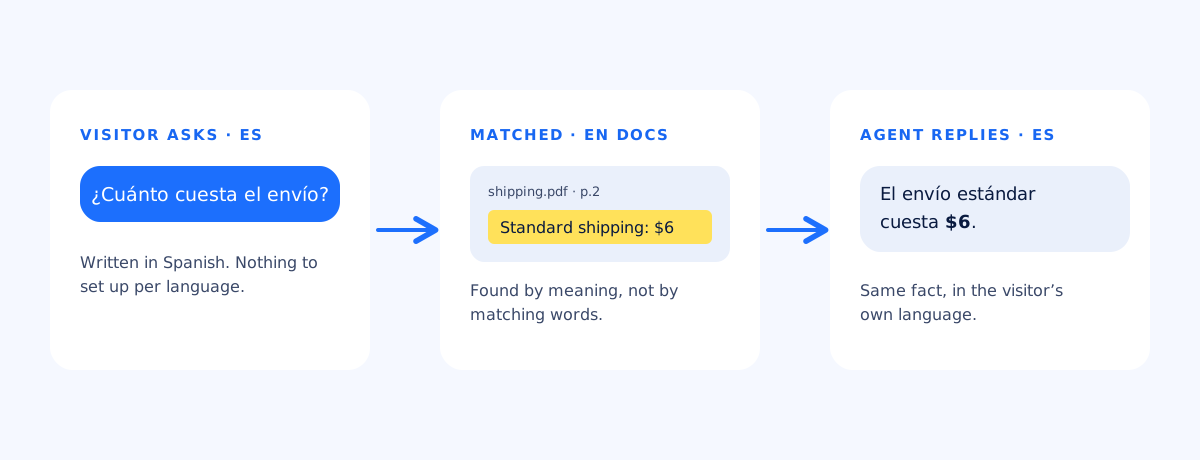
When a visitor types a question, askAgent searches your documents for the passages that best match what they mean, not the exact words they typed. That matters here: "¿Cuánto cuesta el envío?" and "How much is shipping?" land on the same paragraph of your shipping policy, even though they share no words.
The agent then writes its reply from that passage, in the language the visitor wrote in. Prices, hours and policy details come from your document; only the wording changes.
What you need to set up
Nothing per language. There's no list of languages to switch on and no translated copy of your files to upload. If a visitor writes in Polish, the reply is in Polish.
The one thing worth doing is translating the widget's own labels, such as the greeting and the "Type a message" placeholder, into the language most of your visitors use. Those are fixed text, so the agent can't adapt them on the fly. You set them in your chatbot's settings.
Where it works best, and where to be careful
- Facts translate cleanly. Prices, opening hours, addresses, delivery times, sizes and what's in stock come across exactly.
- Names stay as written. Product and service names usually stay in their original language, which is normally what you want.
- Legal wording deserves a human. If a visitor needs the exact text of your contract or warranty terms in their language, offer to send the official version. The agent's reply is a faithful summary, not a certified translation.
Find out which languages you actually need
Once your agent has been live for a few weeks, look at your conversations. You'll see which languages your visitors really write in, which is often a surprise. That tells you where a translated landing page, or a staff member who speaks the language, would pay off most.


