
Why your chatbot should say “I don’t know”
A chatbot that always has an answer sounds impressive, until it promises a discount you don’t offer. Here is why “I don’t know” is the most valuable thing your bot can say.

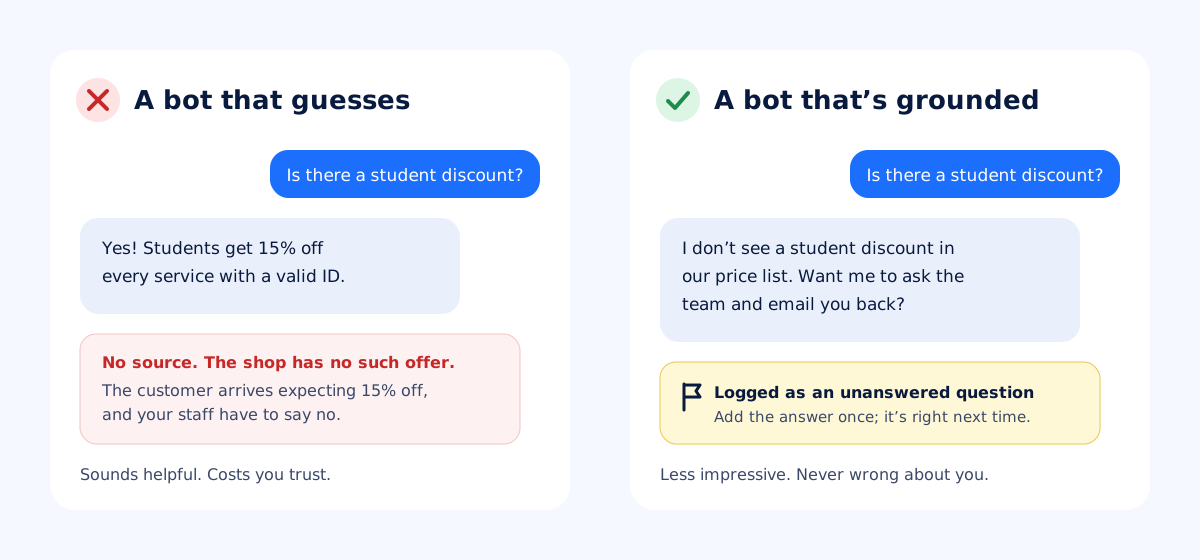
General-purpose AI models are trained to be helpful, and left to themselves they would rather give a confident answer than none at all. Ask one whether your bike shop offers a student discount and it may cheerfully say yes, 15% off with a valid ID. It sounds exactly like something a bike shop would say. It just isn't true for your bike shop.
On a personal assistant, a wrong guess is a small annoyance. On your website, speaking for your business, it's a promise. The customer turns up expecting 15% off, and now your staff have to say no to someone who did nothing wrong.
What “grounded” means
A grounded chatbot answers from a specific set of sources, your documents and web pages, and nothing else. When a visitor asks a question, it first looks up the passages in your material that match, then writes its answer from those passages only. If nothing relevant turns up, it doesn't fill the gap with general knowledge. It says so.
That's how askAgent works. Your agent answers from the files and pages you've added. When the answer isn't there, it tells the visitor and offers to pass the question on to your team.
Three reasons “I don’t know” is good for business
- Trust compounds. Visitors quickly learn whether a chatbot can be relied on. One invented policy, and they'll double-check everything it says, or stop using it.
- A gap becomes a lead. “I don't know, but leave your email and the team will get back to you” turns a dead end into a contact. Names, emails and phone numbers shared in the chat are collected in your leads list.
- You learn what's missing. Every question the agent can't answer lands in the Unanswered report. It's a to-do list written by your customers.
What this means for your documents
A grounded agent is only as good as what you give it. A few habits make a big difference:
- Write down the things you say every day. Opening hours, delivery areas, how bookings work and what happens if someone is late often live only in your team's heads.
- Say what you don't do. “We don't price-match” or “No student discount” are answers too, and they stop the question from going unanswered.
- Replace old files. When prices change, upload the new list in place of the old one so your agent never quotes last year's price.
An assistant that knows the limits of what it knows is less flashy than one that answers everything. It's also the only kind you'd want speaking for your business.


